
Mae’ole
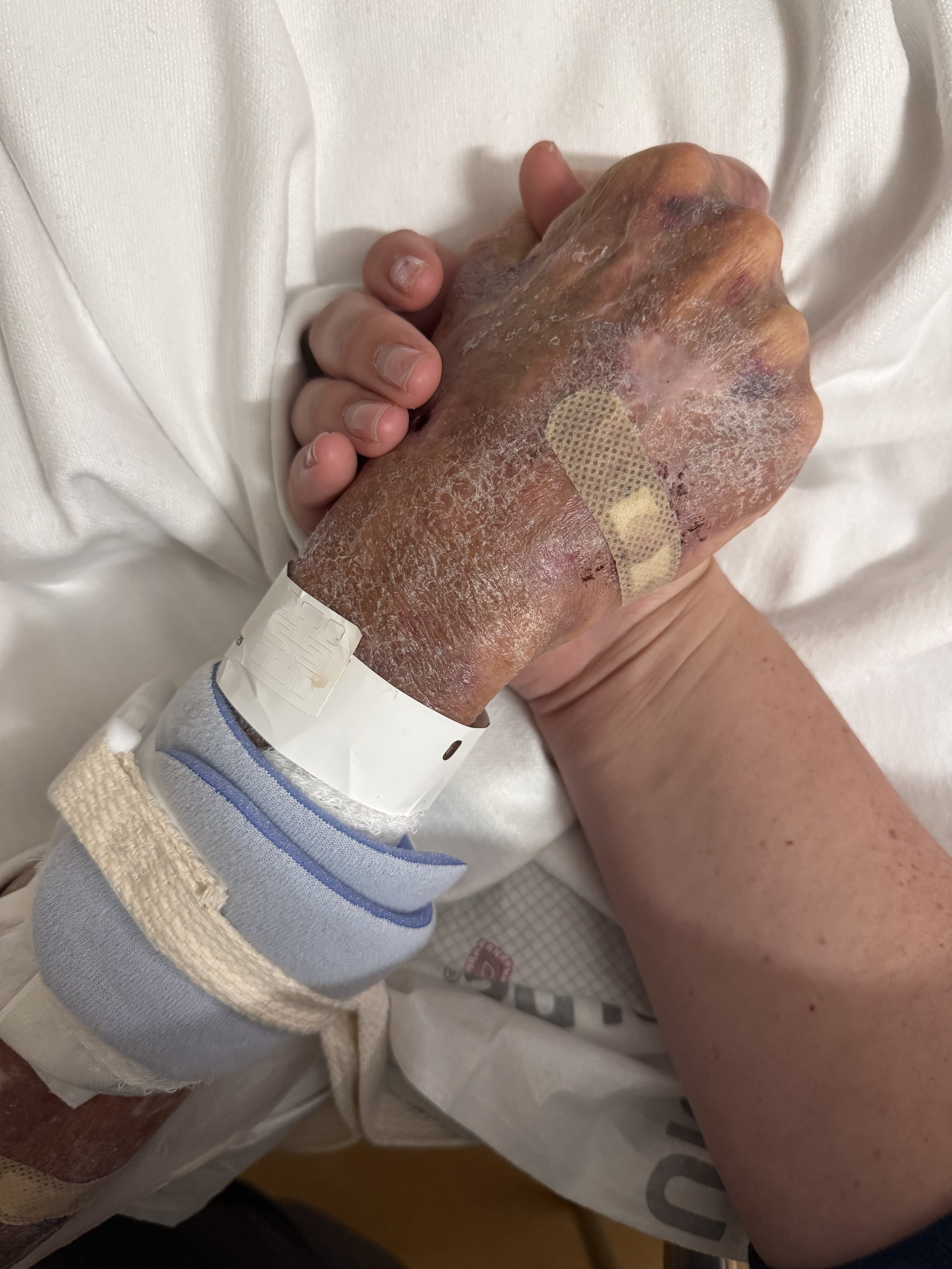
Even though yesterday started well…I was able to show the caregiver how to properly position my father and he had an appetite, by the time I returned he was less perky and he had a fever. The doctor made the call, and my dad is in the ER again.
We were worried about another infection, or worse, pneumonia from aspiration. But his numbers actually look pretty good, and the team now thinks his altered mental status and behavior may be a side effect of the antibiotic Cipro.
At some point in this process, I’ve stopped wasting energy on whether a decision was “right” or “wrong.” You can only make the best decision you can with the information you have and then you move forward.
In the week leading up to his first hospitalization, and again now, his aggression has been intense. And it occurred to me that his aggression has never affected me the way it affects other people like it doesn’t make me wilt.
I’ve been thinking about why.
Part of it, I think, comes from growing up in a home where anger filled the space. Raised voices were normal. Yelling was constant. When you grow up like that, your nervous system adapts. You learn how to stay upright when someone else is dysregulated. You don’t automatically collapse just because someone is loud or angry.
And it’s important for me to say this with nuance: my mother was also deeply loving. Her volatility wasn’t cruelty. It wasn’t until I was fifteen that we learned she was diabetic, and her health worsened over time. Years later — after her kidney transplant — I learned that psychosis was a known side effect of the anti-rejection medication she was prescribed. What I experienced growing up wasn’t simple anger; it was untreated illness moving through a household that didn’t yet have language for it. Knowing that now doesn’t erase the impact, but it gives it context. It helps explain why aggression, by itself, doesn’t scare me.
Another part of this steadiness comes from my work. Years ago, I worked in a program with adjudicated teenage boys. If you’ve ever spent time in spaces like that, you know how often aggression shows up as posturing, discharge, or noise. That experience taught me how to read behavior without immediately personalizing it, how to distinguish between expression and intent, between threat and overwhelm.
And then there’s the most important part: I know my dad.
He was always kind. Gentle. Patient. Generous. So when aggression shows up now, it doesn’t overwrite decades of knowing who he is. I don’t confuse behavior with identity. I can draw a clean boundary and say: this isn’t him — this is the disease.
That separation matters.
Because when you can see behavior without collapsing a person into it, you can respond without cruelty and without self-abandonment. You don’t escalate. You don’t retaliate. You don’t take it personally. But you also don’t excuse it or pretend it isn’t happening.
Aggression, especially in dementia, is information. It’s data. It tells you something is overwhelming the nervous system — fear, confusion, sensory overload, loss of orientation. It isn’t defiance. It isn’t character. It’s communication.
That understanding has helped me stay steady and it’s also helped me know when to step back.
Last night, my dad became agitated with me. I can’t balance myself on two folding chairs in the ER the way I used to, so I made the decision to go home and sleep in my own bed. I stayed long enough to give him his evening medications, hoping they would help him rest. But the ER is the ER, and overnight he became very agitated. This morning I learned they had to place him in restraints.
Being unafraid of aggression doesn’t mean tolerating endless exposure to it. It means recognizing when presence helps…and when it no longer does.
When I went in this morning, he was asleep. He stirred a little, so I told him I loved him. He didn’t repeat it back the way he usually does, but when I kissed his cheek, he kissed me back. His hand wrapped lightly around mine. I’m not alarmed. I think he’s simply spent after a hard night. But it’s still hard — constantly being the steady one. Because the hardest moments aren’t the aggression itself. They’re the moments when connection flickers. When fatigue thins the armor. When love shows up in unfamiliar ways. But even then, the boundary holds. I don’t confuse disease with identity. I don’t confuse behavior with truth.
And I think that’s what makes caregiving sustainable — not toughness, not numbing out, but discernment. The ability to see clearly, even when things get loud
